


Google AI Overviews now appear in over 50% of US searches, and being cited inside one delivers 35% more organic clicks than ranking #1 without a citation. This guide covers every confirmed ranking factor, the Gemini 3 changes from January 2026, what the latest research actually shows about getting cited, and a practical step-by-step strategy you can implement this week, whether you're a brand, an agency, or a solo content creator trying to stay visible in an AI-first search world.
Let's be honest about something first. If you've been searching for "how to rank in Google AI Overview" and reading the same recycled tips about using H2 tags and adding FAQs, you've probably noticed that most of what's out there is surface-level advice that was written before the biggest shift of 2026 happened.
On January 27, 2026, Google upgraded AI Overviews globally to Gemini 3. SE Ranking's analysis found that Gemini 3 replaced approximately 42% of previously cited domains and generates 32% more sources per response than its predecessor. That means nearly half the sites that were getting AI Overview citations before January are no longer getting them. And the rules that got them cited in the first place have materially changed.
This guide is written in the aftermath of that shift. Everything here is grounded in the most recent research available, including data from Ahrefs, BrightEdge, SE Ranking, Seer Interactive, Conductor, and SparkToro, and synthesized into something you can actually use, rather than a list of platitudes about "creating quality content."
Before we talk strategy, you need to understand the mechanism, because optimizing for something you don't understand is just guessing.The experts at Elysian Digital Services have broken down the entire process so you can stop guessing and start executing."
Google AI Overviews, previously called SGE (Search Generative Experience) during its testing phase, are AI-generated summaries that appear at the top of search results for complex, informational queries. They're powered by Google's Gemini family of models, and as of early 2026, they appear for between 25% and 50% of all US searches, depending on the research source you reference.
The technical architecture behind AI Overviews is called Retrieval-Augmented Generation (RAG). Here's what that actually means in plain terms:
Google's system determines whether a query warrants an AI Overview. Complex, multi-part, informational queries almost always trigger one. Simple transactional queries ("buy running shoes") rarely do. According to Ahrefs, AI Overviews still appear for 99.9% of informational keywords.
This is where traditional SEO still matters. Google uses its existing indexing infrastructure to pull a "candidate set" of documents, typically from the top 20 organic results for that query. If you don't rank anywhere in the top 20, your chances of being cited drop dramatically. SeoClarity's research confirms that 97% of AI Overviews cite at least one source from the top 20 organic results.
This is the part most guides don't explain. Gemini 3 decomposes your original query into multiple sub-queries and retrieves sources across all of them. A question like "how to rank in Google AI Overview" might be broken into sub-queries about what AI Overviews are, what factors determine citations, what changed in 2026, and how to implement the strategy. Your content needs to address multiple layers of the topic, not just the surface question.
The Gemini model processes retrieved documents and extracts passages to build the summary. Crucially, every sentence in the AI Overview needs to be "grounded" in a specific retrieved document. If your content makes claims that are ambiguous, unsupported, or require context from elsewhere on your site to make sense, the model cannot extract and use that passage. This is why self-contained passages matter so much.
The system maps parts of its generated text back to source URLs and creates the citation cards you see in the AI Overview. Your goal is to be one of those cards.
Before talking about what to do, let's establish what's actually happening, because the numbers are stark and understanding them changes how you prioritize.
Frequency: AI Overviews now appear in approximately 50% of US searches. BrightEdge data shows consistent growth from 31% to 48% of queries in a single twelve-month period, a 58% increase. If current trajectories hold, AI Overviews could appear in more than 60% of queries by early 2027.
CTR impact on organic results: This is the number that makes SEOs anxious, and it should. Seer Interactive's September 2025 study found organic CTR dropped 61% for queries where AI Overviews are present, falling from 1.76% to 0.61%. Ahrefs' December 2025 analysis found position-one pages losing 58% of their clicks when an AI Overview appears above them. SparkToro's research puts 58% of all Google searches at zero clicks.
But here's the flip side: If your content gets cited inside the AI Overview, everything reverses. Search Engine Land's research shows cited pages earn 35% more organic clicks and 91% more paid clicks than competitors who don't appear in the citation. Being inside the AI Overview is dramatically better than ranking #1 outside it.
The ranking-citation disconnect: In mid-2025, approximately 76% of pages cited in AI Overviews also ranked in the top 10 organic results. By early 2026, that figure has dropped to roughly 38% and possibly as low as one in six depending on the dataset. Nearly half of all AI Overview citations now come from pages that don't rank in the top 10. This is the strategic opening that most businesses are missing.
YouTube's emergence: Ahrefs' research on 75,000 brands found that mentions on YouTube in video titles, transcripts, and descriptions represent the strongest correlating factor with AI Overview visibility among all the signals studied. YouTube is now the single most-cited domain in Google AI Overviews, accounting for 18.2% of all citations that come from outside the top 100. If you're not creating video content, you're leaving citation opportunities on the table.
Based on the most recent large-scale research including analysis of 15,847 AI Overview results across 63 industries here are the factors that actually determine whether Google cites your content.
This is the single most important factor confirmed by current research. Content scoring above 8.5/10 on semantic completeness is 4.2 times more likely to appear in AI Overviews.
What does semantic completeness actually mean? It means that any individual passage from your article, if extracted and shown to a reader without any other context, would fully answer the question it addresses. No dangling references. No "as we discussed above." No pronouns pointing back to earlier content. Each key passage should be a self-contained unit of understanding.
Research recommends targeting 127–156 words per key answer passage. Think of each important section of your article as a mini-answer that could stand alone. This is the most direct thing you can do to improve AI Overview eligibility, and it costs nothing except a rewrite of your content structure.
The test to apply before publishing anything: read each H2 or H3 section in isolation. If it makes complete sense without reading anything else on the page, you're in good shape. If it requires context from elsewhere, revise it until it doesn't.
This is the number-one new ranking factor of 2025–2026, and it represents the biggest structural shift from how content optimization used to work.
Pages that combine text, images, videos, and structured data see 156% higher selection rates compared to text-only content. By late 2025, 78% of featured sources included multi-modal elements. Text-only content now faces a significant competitive disadvantage.
This doesn't mean you need a production team. It means:
The underlying reason this matters: Gemini is a multi-modal model. It processes images, video, and text simultaneously. Content that matches the model's native processing format gets extracted more effectively.
Experience. Expertise. Authoritativeness. Trustworthiness. Google's March 2026 core update reinforced this sites producing expert, human-led content gained visibility, while AI-generated content without proper editorial oversight dropped.
96% of pages cited in AI Overviews demonstrate clear E-E-A-T signals. What does that look like in practice?
Experience: First-hand accounts, case studies, real results, screenshots of actual work. Not theoretical claims demonstrated proof. If you're writing about SEO, show your own data. If you're writing about a process, show your own implementation.
Expertise: Author bylines with verifiable credentials. About pages that are specific, not generic. Professional affiliations, published work, speaking engagements, any external verification that the person writing knows what they're talking about.
Authoritativeness: Backlinks from industry publications. Mentions in relevant forums and communities. Citations from other respected sources. Google's AI checks your identity across the web. It's doing a verification protocol, not just reading your page.
Trustworthiness: Factual accuracy with cited sources. Transparent corrections when information changes. Privacy policies, contact information, and clear business identity. SSL. No misleading claims.
One specific action that makes a measurable difference: cite your sources with links. Content that references recent academic studies, government data, or well-known industry research sees a +132% visibility increase in AI Overviews the highest single-factor improvement in the current data.
Google's AI systems map your content to the Knowledge Graph the massive database of real-world entities (people, places, organizations, concepts) and their relationships.
Pages with 15 or more recognized entities per 1,000 words see a 4.8x boost in AI Overview selection rates. This doesn't mean keyword-stuffing with proper nouns. It means writing with precision naming specific people, tools, platforms, research studies, and concepts instead of speaking in generalities.
Practical application: Instead of "research shows that content quality matters," write "Ahrefs' December 2025 study of 863,000 keywords found that 62% of AI Overview citations come from pages that don't rank in the top 10." That single sentence contains multiple entities Ahrefs, a specific study, a specific date, a specific finding all of which connect to Google's Knowledge Graph and strengthen your content's entity density.
Structured data (schema markup) makes entity relationships explicit to the AI. Use LocalBusiness, Article, Person, FAQPage, and HowTo schema wherever relevant. Pages with explicit schema markup see a 73% higher selection rate in AI Overviews.
AI Overviews are designed to provide accurate, current information. Content with verifiable facts and up-to-date citations sees an 89% higher probability of being cited.
This has a practical implication that most SEO guides don't address: your content has an expiration date in the AI Overview era. A blog post from 2023 with outdated statistics is actively penalized compared to an equivalent 2026 post with current data. Build content updating into your editorial calendar. Date-stamp your articles. Add "last updated" dates. Reference the most recent research available.
This is also why Google's upgrade to Gemini 3 displaced 42% of previously cited domains; the new model is better at assessing content recency and factual accuracy, and content that was good enough in 2025 may no longer meet the higher bar Gemini 3 applies.
A single excellent article is less likely to get cited than a single excellent article backed by a cluster of related, thorough content on the same topic.
Google favors pages that demonstrate depth across a subject rather than isolated pieces of content. This aligns with the hub-and-spoke model that's been effective in traditional SEO but in the AI Overview era, it's not just about internal links. It's about demonstrating to Gemini that your site is a genuine authority on the subject, not a site with one good post surrounded by unrelated content.
47% of AI citations come from pages that rank below position #5 and research suggests this is often because the content belongs to a site with genuine topical authority even if that individual page isn't the top-ranked result. Building topical depth across a content cluster matters as much as optimizing any individual piece.
Gemini's attention mechanisms identify which parts of your text are most relevant to the user's query. Well-structured content makes this extraction significantly easier and research shows structured content sees dramatically higher citation rates.
What extractable structure looks like:
One specific structural pattern that works particularly well: front-load your answers. State the direct answer in the first sentence after a heading, then provide the supporting context. This mirrors how featured snippets have always worked, and AI Overviews extend that same logic.
Most guides being published right now were written before January 27, 2026. That's the date Google upgraded AI Overviews globally to Gemini 3, and the impact on citation patterns was immediate.
If your site was getting AI Overview citations before January and stopped seeing them in February, the Gemini 3 upgrade is likely why.
Gemini 3 cites more sources per AI Overview than its predecessor. This is both good and challenging; there are more citation slots available, but also more competition for each one.
Gemini 3 is significantly better at decomposing complex queries into sub-queries and retrieving specific, relevant content for each sub-component. This rewards content that covers topics comprehensively from multiple angles rather than content optimized for a single keyword phrase.
The upgrade appears to have significantly boosted YouTube's citation rate. For content marketers, this is the clearest signal to invest in video alongside written content.
Gemini 3 has materially better hallucination-prevention mechanisms, which means it's stricter about "grounding" its outputs in verifiable, current sources. Content with outdated statistics or unsourced claims was disproportionately displaced by the upgrade.
All the research in the world is useless without execution. Here's a concrete, prioritized implementation plan.
Before creating anything new, audit what you already have. Use Google Search Console to identify:
Run these pages through a semantic completeness check. Read each major section in isolation. If it requires context from elsewhere to make sense, add a brief inline definition or context sentence. This single change can meaningfully improve your citation eligibility on existing content without requiring a full rewrite.
Take your top informational pages and implement the following in order of impact:
Add verifiable data with inline attribution. Every statistical claim should cite a named source with a date. "Research by [Source], published [Year], found that [specific finding]." This simultaneously improves entity density, factual verifiability, and E-E-A-T.
Restructure for front-loaded answers. For each H2 and H3 section, ensure the first sentence directly answers the question implied by the heading. Move supporting context to sentences 2–4. This is the single structural change most likely to improve AI extraction.
Add a proper FAQ section. FAQs with direct answers are one of the most consistently cited content formats in AI Overviews. Questions should match actual user search queries use "People Also Ask" boxes from Google, Answer The Public, or your own Search Console data for question inspiration.
Implement FAQ schema markup. Adding FAQPage schema to your FAQ section makes the question-answer structure explicit to Google's indexing system. Combined with well-written FAQ content, this sees a 73% higher selection rate.
Update dates and statistics. Any article over six months old should be reviewed for outdated data. Replace 2023 or 2024 statistics with the most current available. Update the "last modified" date in your page metadata and CMS.
AI Overview eligibility isn't just about what's on your page it's about how Google's AI perceives your entity across the web.
Consistent NAP and brand information. Ensure your business name, website URL, and key information are consistent across all directories, social profiles, and citation sources. Inconsistency confuses entity recognition.
Earn mentions from relevant publications. Distributing content to a wide range of publications can increase AI citations by up to 325% compared to only publishing content on your own site, according to research by Stacker. Guest posts, press coverage, podcast appearances, and industry citations all contribute.
YouTube presence. Given YouTube's position as the most-cited domain in AI Overviews, creating video content that mirrors your written content topics is now a strategic priority, not an optional add-on. At minimum, embed relevant YouTube videos (your own or authoritative external ones) in your articles.
Reddit and forum presence. Research by Ahrefs and SparkToro consistently shows that community platform mentions are factored into AI visibility. Genuine contributions to relevant subreddits, forums, and Q&A communities answering questions in your area of expertise build the unstructured citation profile that AI systems evaluate.
Technical issues don't override great content, but they do prevent great content from being indexed and evaluated properly.
Schema markup implementation. Implement Article, Author, Organization, FAQPage, and HowTo schema as relevant to your content type. Use Google's Rich Results Test to verify implementation.
Core Web Vitals. Pages that are slow to load or have poor mobile experience are at a technical disadvantage. LCP under 2.5 seconds and CLS under 0.1 are the two metrics most worth prioritizing.
Crawlability audit. Confirm that your important pages are being crawled and indexed. Use Google Search Console's Coverage report and run a crawl using Screaming Frog or Ahrefs Site Audit. Orphaned pages that aren't internally linked won't be found reliably by Googlebot.
Author pages. Create dedicated author profile pages with credentials, external links to professional profiles (LinkedIn, published articles, speaking engagements), and a headshot. Author identity is one of the clearest E-E-A-T signals available.
One of the most common questions is whether AI Overviews replace traditional SEO or coexist with it. The answer is nuanced and important.
As Google's senior search analyst John Mueller stated clearly in 2026: "There is no such thing as GEO or AEO without doing SEO fundamentals." Keyword research, technical SEO, and on-page optimization are not going away. They're the foundation on which AI visibility is built.
What's changed is the layer on top of that foundation. Three frameworks now operate simultaneously:
SEO (Search Engine Optimization): The traditional practice of ranking in organic search results. Still essential if you're not in the top 20 for a query, you have very limited AI Overview visibility for that query.
AEO (Answer Engine Optimization): Optimizing specifically for direct answer extraction structured content, self-contained passages, FAQs, and schema that makes your content's answers explicit and extractable. This is the layer that converts traditional rankings into AI citations.
GEO (Generative Engine Optimization): Optimizing your brand's overall presence across the web for generative AI systems including ChatGPT, Perplexity, Gemini, and others. This includes your entity footprint, YouTube presence, community mentions, and cross-platform brand authority. GEO is what gets your brand recommended when someone asks an AI assistant for recommendations in your category.
The businesses that are winning in 2026 are implementing all three simultaneously. Traditional SEO gets you in the candidate set. AEO converts that candidacy into citations. GEO builds the brand authority that makes citations consistent rather than occasional.
Is SEO Dead in 2026? The Honest Answer
This question comes up in every conversation about AI Overviews, and it deserves a straight answer rather than defensive reassurance.
Traditional organic traffic is under pressure. That's not debatable. Organic CTR for queries with AI Overviews has dropped 61% in the most recent data. For simple informational queries where AI provides a complete answer, clicks to traditional results have declined significantly.
But here's what the data actually shows: total search volume is growing. Graphite's March 2026 research found that total usage of search combining search engines and LLM search has increased by 26% worldwide. The pie is getting bigger even as the slice from traditional organic clicks is getting smaller.
And the businesses cited inside AI Overviews are growing their organic clicks, not losing them. The 35% click uplift for cited pages means that getting into the AI Overview is now worth more than ranking #1 outside it.
SEO is not dead. It's fragmenting into multiple channels and disciplines traditional organic, AI citation, generative AI recommendation, video search, and conversational search. The businesses that understand these channels as complementary parts of a single strategy are the ones growing in 2026. The ones treating AI as a threat to their existing strategy rather than an expansion of it are the ones losing ground.
Ranking in Google AI Overviews requires a combination of traditional organic SEO (to get into Google's candidate retrieval set), semantic content optimization (to create self-contained, extractable passages that Gemini can directly cite), strong E-E-A-T signals (to pass Google's trust and expertise evaluation), and entity-building across the web. The most impactful single change most sites can make is restructuring existing content so key passages are self-contained, answering the question completely without requiring context from elsewhere on the page.
Google AI Overview uses a Retrieval-Augmented Generation (RAG) system. Google first retrieves a candidate set of documents from its indexed web (typically top 20 organic results). Gemini's language model then extracts relevant passages, synthesizes a summary, and maps specific claims back to source URLs to create citation cards. Gemini 3 (deployed January 27, 2026) also uses "query fan-out" breaking complex questions into sub-queries and retrieving sources across each one.
Google introduced AI Overviews during Google I/O in May 2023 under the name SGE (Search Generative Experience), began limited testing in the US in mid-2023, and rolled out AI Overviews globally under their current name in May 2024. The feature was upgraded to run on Gemini 3 globally on January 27, 2026.
Cited pages in AI Overviews receive 91% more paid clicks than non-cited competitors. However, for advertisers bidding on queries that trigger AI Overviews, the organic CTR compression means more of the remaining click traffic goes to paid results. Gartner projects overall organic CTR declining 25% by the end of 2026, which has implications for both content strategy and PPC budgeting.
Ranking #1 on Google in 2026 requires the traditional SEO fundamentals (keyword-matched content, strong backlink profile, technical health, E-E-A-T) plus the emerging AEO layer (content structured for AI extraction, schema markup, self-contained answer passages). However, ranking #1 in traditional organic results is now less valuable than being cited inside an AI Overview for the same query cited pages receive more clicks than #1-ranked pages outside the Overview.
To get cited in Google AI Overviews: (1) rank in the top 20 organic results for your target query, (2) structure key content sections as self-contained 127–156-word answer passages, (3) add FAQ schema markup, (4) cite verifiable sources with specific dates and findings, (5) include images and/or video to trigger multi-modal integration benefits, (6) build E-E-A-T signals on your author pages and about pages, and (7) build mentions of your brand across external publications, YouTube, and community platforms.
SGE (Search Generative Experience) was the previous name for what Google now calls AI Overviews. The optimization strategies are the same: topical authority, semantic completeness, E-E-A-T signals, structured data, and multi-modal content. The system is now powered by Gemini 3 (as of January 2026) and applies stricter factual verification than earlier versions.
Use this to audit any page you want to optimize for AI Overview citations:
Content Structure:
Direct answer in the first sentence after each heading
Technical:
Authority Signals:
Entity Footprint:
Need help implementing this? Contact us today.
What percentage of Google searches trigger AI Overviews in 2026?
Approximately 50% of US Google searches now trigger an AI Overview, according to the most current research from BrightEdge and Conductor. The figure varies by query type informational queries trigger AI Overviews at a much higher rate than transactional or navigational queries.
Does ranking #1 guarantee an AI Overview citation?
No. As of early 2026, only about 38% of AI Overview citations come from pages that rank in the top 10 organic results for the same query down from 76% in mid-2025. Content quality, semantic completeness, and entity authority matter as much as traditional ranking position.
How long does it take to start appearing in AI Overviews?
There's no definitive timeline. Pages with existing rankings and strong E-E-A-T can see AI Overview citations emerge within days of content updates. New pages on new sites building authority from scratch may take several months to achieve the trust signals required for consistent citation.
Does AI Overview hurt my website traffic?
It depends on your citation status. If AI Overviews appear for your target queries and you're not cited, your organic CTR will likely decline significantly research shows 58–61% CTR drops. If you are cited inside the Overview, your organic clicks increase by approximately 35%. The strategy is to get cited, not to avoid AI Overviews appearing.
Is Google AI Overview the same as featured snippets?
They're related but distinct. Featured snippets pull a single passage from one source and display it verbatim. AI Overviews synthesize information from multiple sources into a new generated answer. Both reward similar structural characteristics in content, but AI Overviews are more complex, credit multiple sources, and are more difficult to "capture" through any single optimization tactic.
What is the difference between SEO, AEO, and GEO?
SEO (Search Engine Optimization) focuses on ranking in traditional organic results. AEO (Answer Engine Optimization) focuses on structuring content so AI systems can extract and cite it directly. GEO (Generative Engine Optimization) focuses on building brand presence across the web so generative AI systems Google, ChatGPT, Perplexity, and others recognize and recommend your brand. All three are necessary in 2026.
Learn more about the expert behind this content and their industry experience.
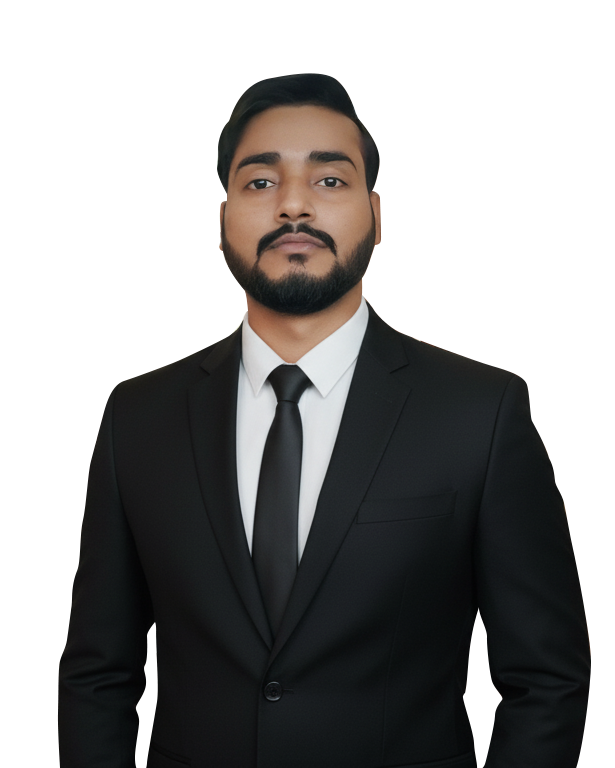
Bijendra Thakur is an SEO Specialist with 7+ years of experience in driving organic growth and dominating search rankings. He specializes in on-page, technical SEO, and advanced content strategies that improve visibility and generate high-quality leads. Bijendra has successfully helped businesses rank on Google’s first page, boost traffic, and achieve long-term results through data-driven SEO techniques.
Discover tailored digital marketing solutions designed to boost your visibility, increase ROI, and support your business growth. Connect with our experts today.
Get In Touch