


Every business owner in Delhi knows the feeling. A customer walks out happy, the job is done well, and you want to ask for a Google review, but something stops you. Maybe it feels pushy. Maybe you don't know what to say without sounding like you're begging. So you let the moment pass, the customer leaves, and that review never gets written.
Multiply that hesitation across hundreds of customers and you get what most local businesses in Delhi are dealing with right now: a great reputation that nobody can actually see on Google.
If you're trying to get more Google reviews for your Delhi business, the good news is that you don't need scripts that sound desperate or gimmicks that put your listing at risk. You need a system that fits naturally into how your business already runs, and one that stays well within Google's current rules. That's what this guide is about.
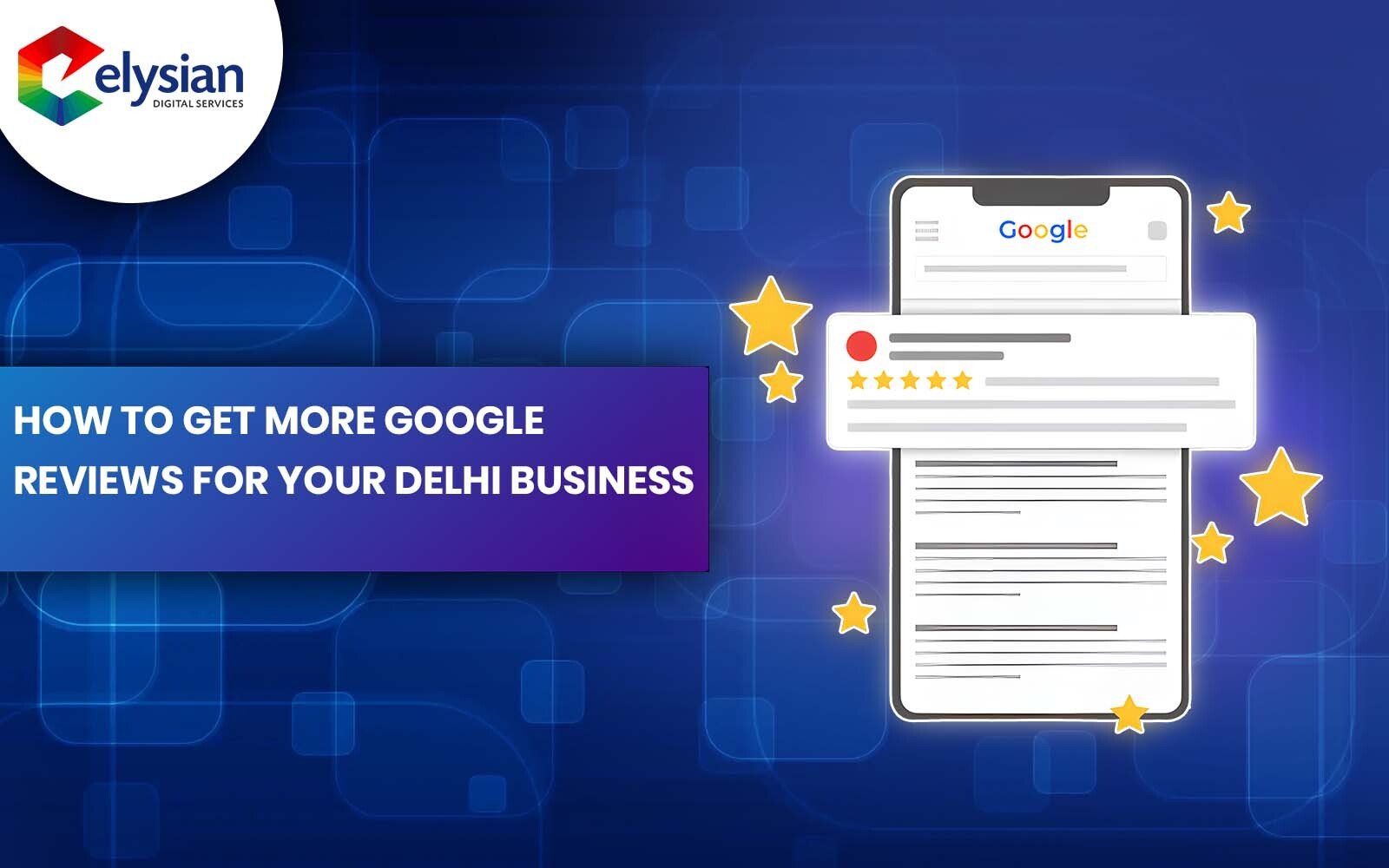
Reviews aren't just social proof anymore, they're a ranking factor. When someone in Karol Bagh, Dwarka, or Gurugram searches for "dentist near me" or "best digital marketing agency in Delhi," Google's local algorithm looks at three things: relevance, distance, and prominence. Prominence is heavily shaped by how many reviews you have, how recent they are, and your average rating.
This is exactly why review volume and review velocity (how steadily new reviews come in) directly affect whether you show up in the local 3-pack on Google Maps. A clinic with 12 reviews from two years ago will almost always lose visibility to a competitor with 80 reviews coming in steadily every month, even if the older clinic is genuinely better at what it does.
So when business owners ask how to increase reviews on Google Maps, they're really asking how to improve local visibility. The two are tied together.
This part matters more than most local SEO blogs will tell you. Google has been tightening its review policies, and a lot of tactics that agencies and businesses used to rely on are now explicitly against the rules. Offering a discount or freebie in exchange for a review, filtering out unhappy customers before asking for feedback (known as review gating), pressuring customers to leave a review while still on your premises, and asking customers to specifically name a staff member in their review are all treated as manipulation. Profiles caught doing this risk having reviews removed or the entire listing restricted.
You can read Google's official position on what counts as rating manipulation directly on the Google Maps user-generated content policy page, which is worth bookmarking if you manage your own Google Business Profile.
The flip side of this is actually good news. Simply asking every customer for honest feedback, with no incentive and no filtering, has always been allowed and encouraged. So the businesses that win in 2026 aren't the ones running clever loopholes, they're the ones who build a clean, consistent habit of asking.
Here's where most of the awkwardness actually comes from: businesses ask at the wrong moment, through the wrong channel, or with the wrong words. Fix these three things and the request stops feeling like a favour you're demanding.
Timing comes first. The best window to ask is within 24 to 48 hours of the service, while the experience is still fresh. Asking a week later usually gets ignored simply because the customer has moved on mentally.
Channel comes second, and in Delhi this matters a lot. Email open rates among Indian consumers are often weak compared to WhatsApp and SMS. A short WhatsApp message with a direct review link, sent right after a service or delivery, tends to convert far better than an email buried in a promotions folder.
Wording comes third. Keep it neutral and short. Something like "Thank you for visiting us today. If you have 30 seconds, we'd really appreciate your honest feedback on Google" works better than anything that hints at wanting five stars specifically. It also keeps you compliant, since Google doesn't allow steering customers toward a particular rating or specific wording.
A QR code at the billing counter or printed on the invoice removes another layer of friction entirely. The customer scans, taps, types, done, no app download, no searching for your business name.
And if you genuinely want this to scale without anyone on your team having to remember to ask, this is exactly the kind of thing that's easy to automate through a CRM trigger or a simple WhatsApp Business flow that fires after every completed order or appointment.
Review strategy isn't one-size-fits-all. A restaurant, a clinic, and an agency each have a different "right moment" to ask.
For restaurants, the best window is right after the bill arrives and the customer is settling up, not midway through the meal when they're still deciding how they feel. A simple table tent QR code with "Loved the food? Tell Google" works far better than a waiter verbally asking, which can feel like pressure, especially with other tables watching.
For clinics and healthcare practices, sensitivity matters. Patients may not want their visit linked publicly to a specific condition, so keep the request general and let the patient decide what to mention. An SMS sent a day after the appointment, asking simply for honest feedback on the experience, respects that boundary while still opening the door.
For agencies, whether you're in SEO, legal services, or consulting, the moment to ask is after a clear win: a campaign milestone, a successful project delivery, or a contract renewal. A personalised email or LinkedIn message that references the specific result you delivered together tends to get a far more detailed, far more useful review than a generic request ever will.
Asking for reviews is only half the job. How you respond to the reviews you already have matters just as much, sometimes more, because prospective customers read your replies before they read the reviews themselves.
A short, genuine thank-you on a positive review shows you're paying attention. A calm, professional response on a negative review, acknowledging the issue and offering to resolve it offline, often does more for your credibility than the negative review does damage. What nobody should do is copy-paste the same reply under every single review. It's the fastest way to look automated and disinterested.
A few patterns show up again and again with local businesses trying to grow their review count quickly. Asking only customers you're confident will say something nice, while skipping the difficult ones, is review gating, and it's explicitly against policy now. Offering any kind of discount, freebie, or loyalty point for a review, even a small one, falls under incentivised reviews and puts your whole profile at risk. Running one big review-collection push and then going quiet for months creates an unnatural pattern that Google's spam detection is built to catch. And training staff to ask for reviews "while the customer is still standing at the counter" can tip into the kind of on-premises pressure Google now flags directly.
The safest, and frankly the most sustainable, approach is a slow, steady drip: a handful of genuine reviews coming in every week from real customers, asked at the right moment, through the right channel.
Reviews are one piece of a much larger local visibility system. They work alongside your Google Business Profile setup, your website's local content, and your citation consistency across the web. A business with great reviews but a poorly optimised Google Business Profile, or inconsistent business details across directories, still struggles to rank. If you want a clear picture of how all these pieces fit together for your specific business, our local SEO services page breaks down exactly how we approach Google Business Profile optimisation, review strategy, and local content as one connected system rather than isolated tasks.
Is it allowed to ask customers for Google reviews in India?
Yes, completely. Asking customers for honest feedback is explicitly permitted by Google. What's not allowed is offering incentives, filtering customers by expected sentiment, or pressuring them while they're still on your premises.
How many reviews do I actually need to show up in the local 3-pack?
There's no fixed number, since it depends on your competition and category. What matters more than a magic number is consistency, having a steady stream of recent, genuine reviews tends to outperform a one-time spike, even a large one.
Can my staff leave reviews for the business themselves?
No. Reviews from employees or owners are treated as a conflict of interest and can be removed, regardless of how genuinely they feel about the business.
What's the right way to respond to a one-star review?
Stay calm, acknowledge the concern without getting defensive, and invite the customer to continue the conversation privately by phone or email. Avoid sharing personal details about the customer or the situation in your public reply.
Getting more Google reviews for your Delhi business doesn't require pressure tactics or policy-breaking shortcuts. It requires a simple, repeatable habit: ask the right person, at the right moment, through the right channel, and respond to what comes back with honesty. Do that consistently for a few months, and the review count takes care of itself.
If you'd rather have this built and managed for you as part of a complete local SEO plan, the team at Elysian Digital Services can set up the entire system, from Google Business Profile optimisation to review generation, so it runs quietly in the background while you focus on running your business.
Learn more about the expert behind this content and their industry experience.

Bijendra Thakur is an SEO Specialist with 7+ years of experience in driving organic growth and dominating search rankings. He specializes in on-page, technical SEO, and advanced content strategies that improve visibility and generate high-quality leads. Bijendra has successfully helped businesses rank on Google’s first page, boost traffic, and achieve long-term results through data-driven SEO techniques.
Discover tailored digital marketing solutions designed to boost your visibility, increase ROI, and support your business growth. Connect with our experts today.
Get In Touch